Home
Giant Clam and Mermaid
- Details
- Category: Sculptures

The Giant Clam (Tridacna gigas) is the largest living mollusk, averaging about 4 feet across and weighing over 400 pounds. With a lifespan of over 100 years, these massive bivalves have been on earth since the early Miocene era (about 20 million years ago). Due to extensive fishing (for food and the aquarium trade), their status is currently listed as "Vulnerable." Ancient mariners have told legends about them being man-eaters (almost certainly false), so I took some artistic license juxtaposing the shell of one exceptionally gigantic specimen and another maritime legend, the mermaid. Incidentally, one of the largest pearls ever found weighed over 75 pounds and was produced by the giant clam. My thanks again to the Ceramic Art Studio and Shop.


Wet clay model
Medusa
- Details
- Category: Sculptures

In Greek mythology Medusa was originally a beautiful maiden who was later turned into a gorgon, a winged creature with snakes prominently in place of hair, whose face turned onlookers to stone. She was slain by the hero Perseus who gave her head to Athena to adorn her shield. Coincidentally, it is said that Pegasus sprang from Medusa's body upon her death, and that Atlas was transformed into the Atlas Mountains when he tried to attack Perseus as he flew by with her severed head. The ancient Greeks used the Medusa image as a form of protection against bad spirits and the evil eye. Medusa was represented in ancient art as either hideous (with bulging eyes, boar tusks, and beard) or as a beautiful woman after the 5th century BC, often with tiny wings on her forehead. I like to think that Medusa, being the only mortal gorgon, was still beautiful while her other gordon sisters were not. This piece consumed a lot of time (and clay) to sculpt (there are 46 visible snake heads). Unfortunately I didn't hollow out the head sufficiently, and a vertical crack formed down her left eye. Repairing this was the main reason I chose to paint the entire piece, and based on the results there may be a Medusa 2.0 at some point in the future. A slab of petrified wood fittingly serves as the base. My thanks again to the Ceramic Art Studio and Shop.


Medusa Wet Clay Model
 Medusa Concept Sketch - iPad Pro with Apple Pencil
Rhino in the Rain
- Details
- Category: Sculptures
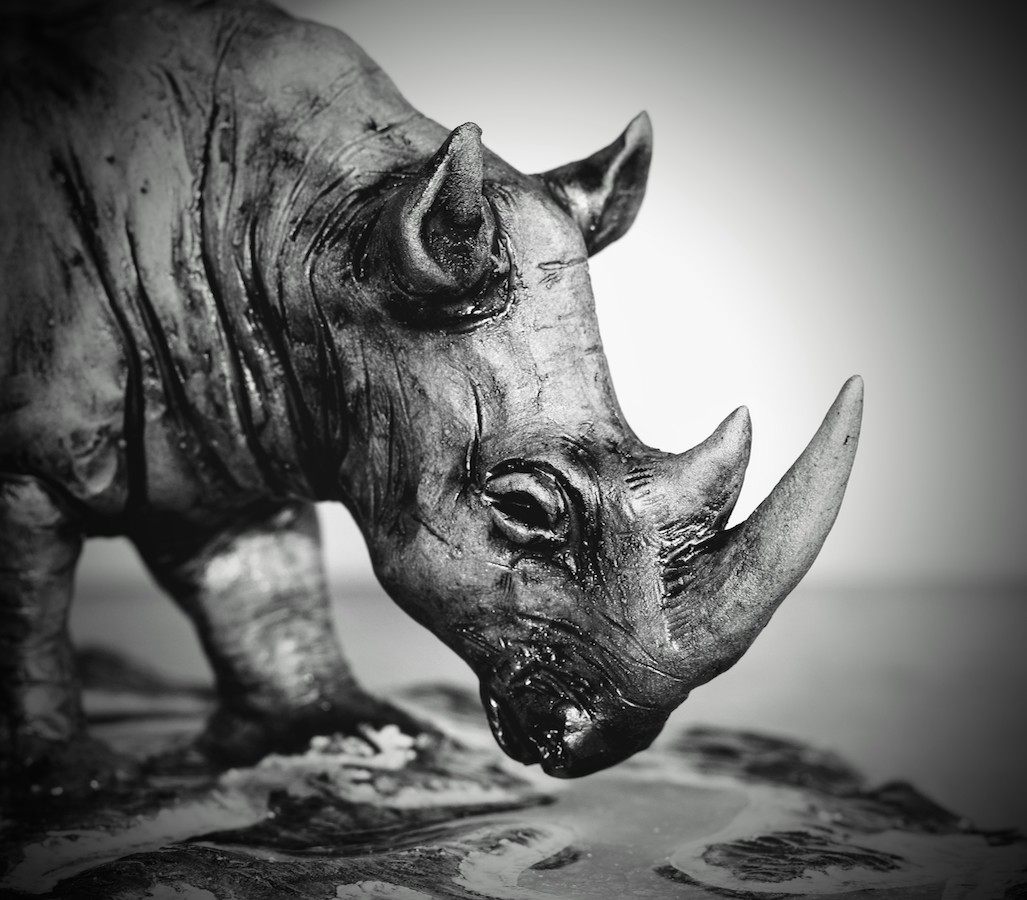
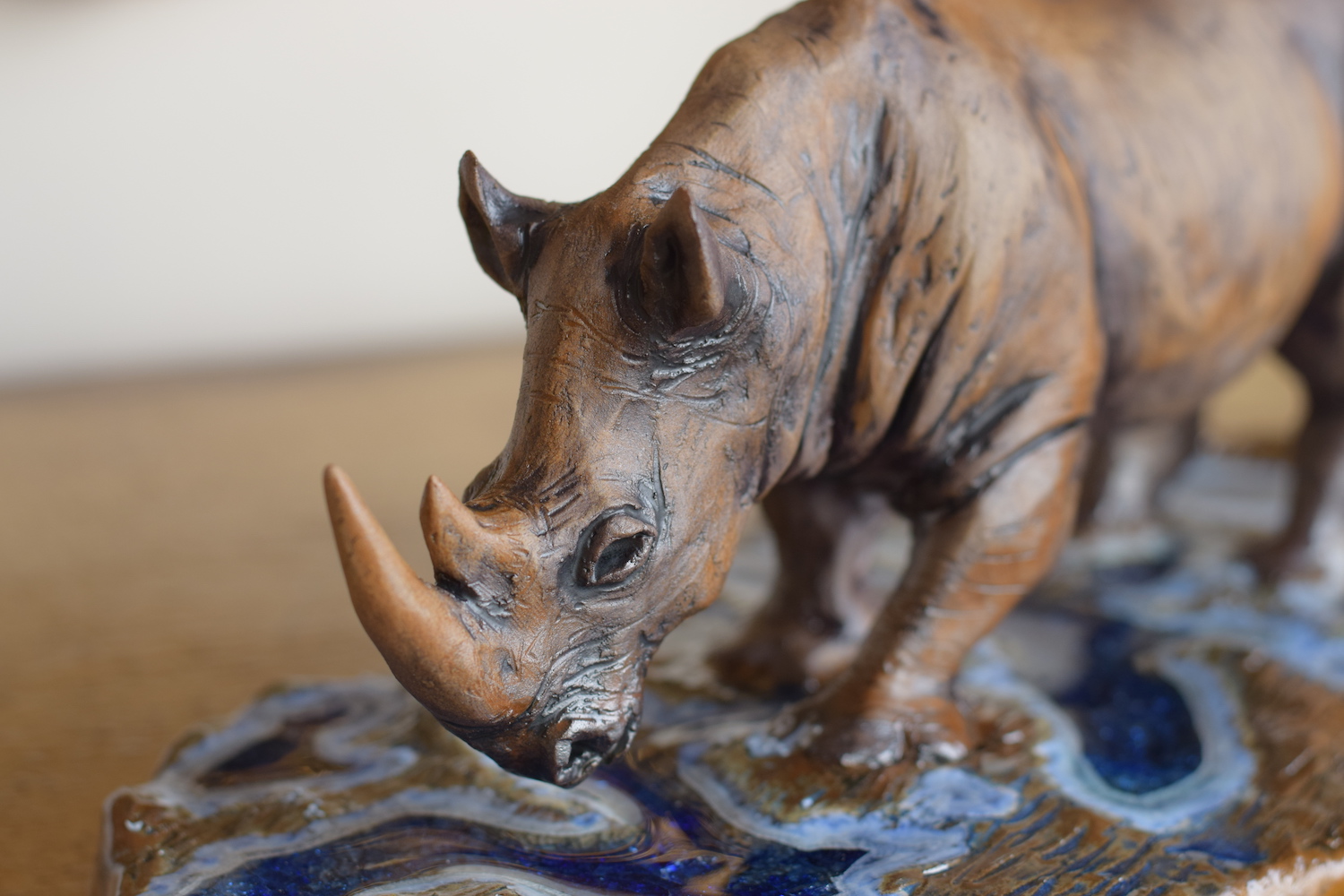
The rhinoceros is one of the largest land animals, weighing above 4,000 lbs (Indian rhinos can weigh up to 7,500 lbs). They compensate for their poor eyesight with better hearing and smell, and can live between 35 to 40 years. Their physical appearance (or that of their ancestors) may have contributed to the myth of the unicorns. Rhinos are highly endangered due to poaching for their horns which are actually thickly matted hair comprised of keratin. Since the 1970's their population has diminished by 90% worldwide. My inspiration to sculpt this magnificent beast in the rain came from a dream I had one night. Thanks again to the Ceramic Art Studio and Shop.
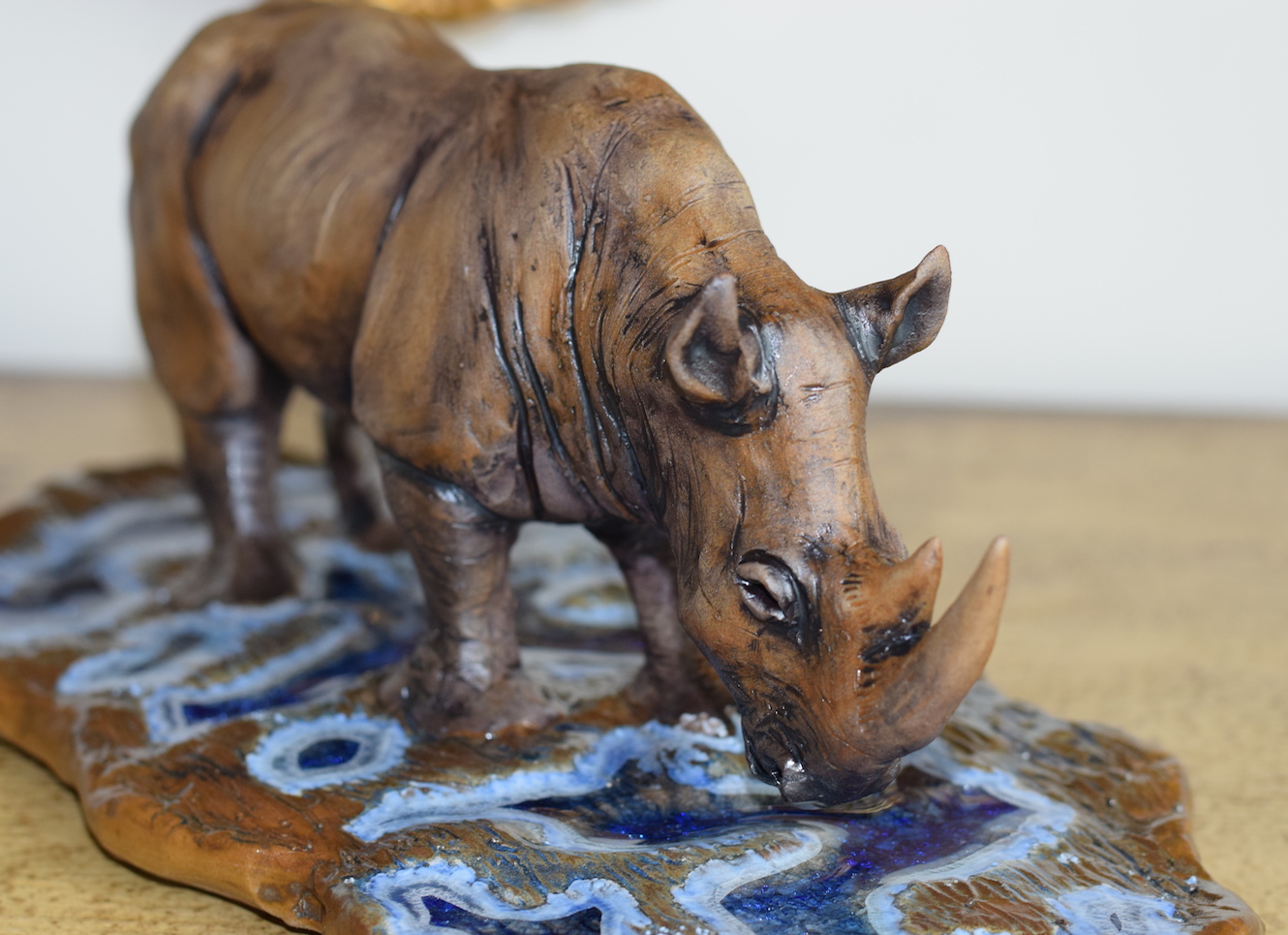
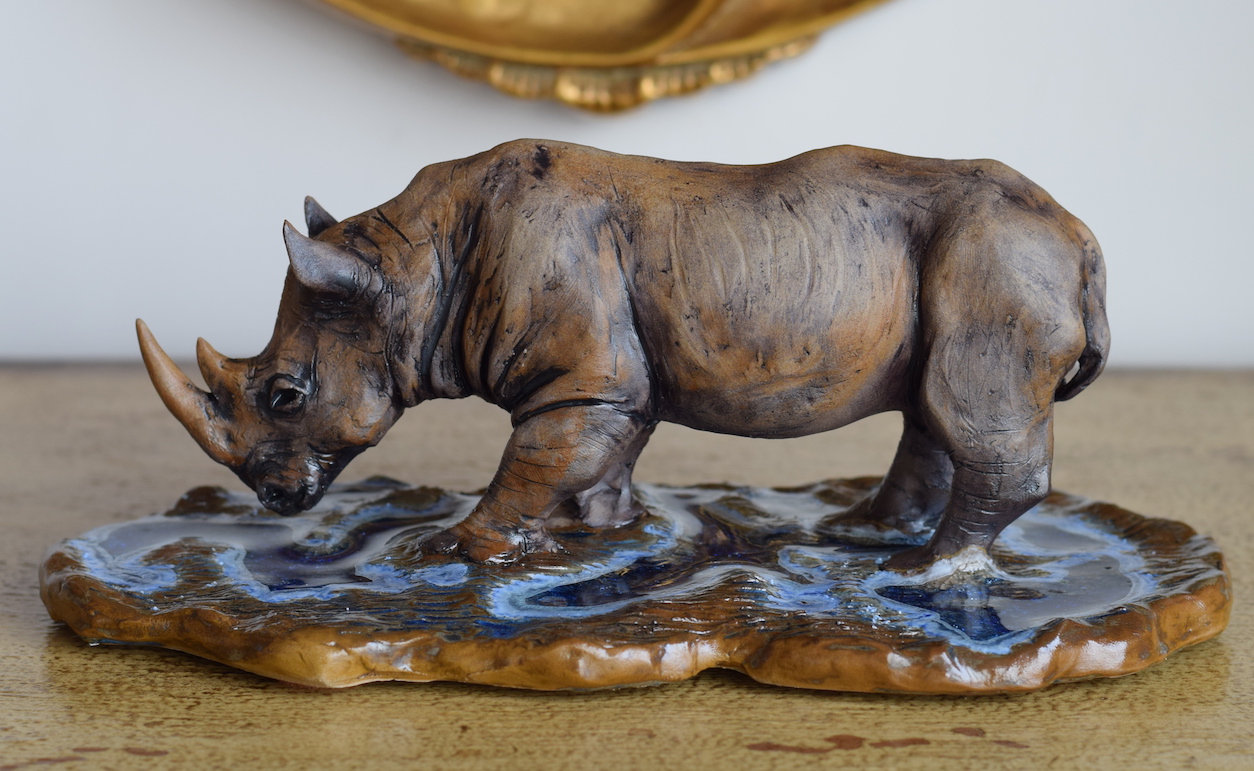

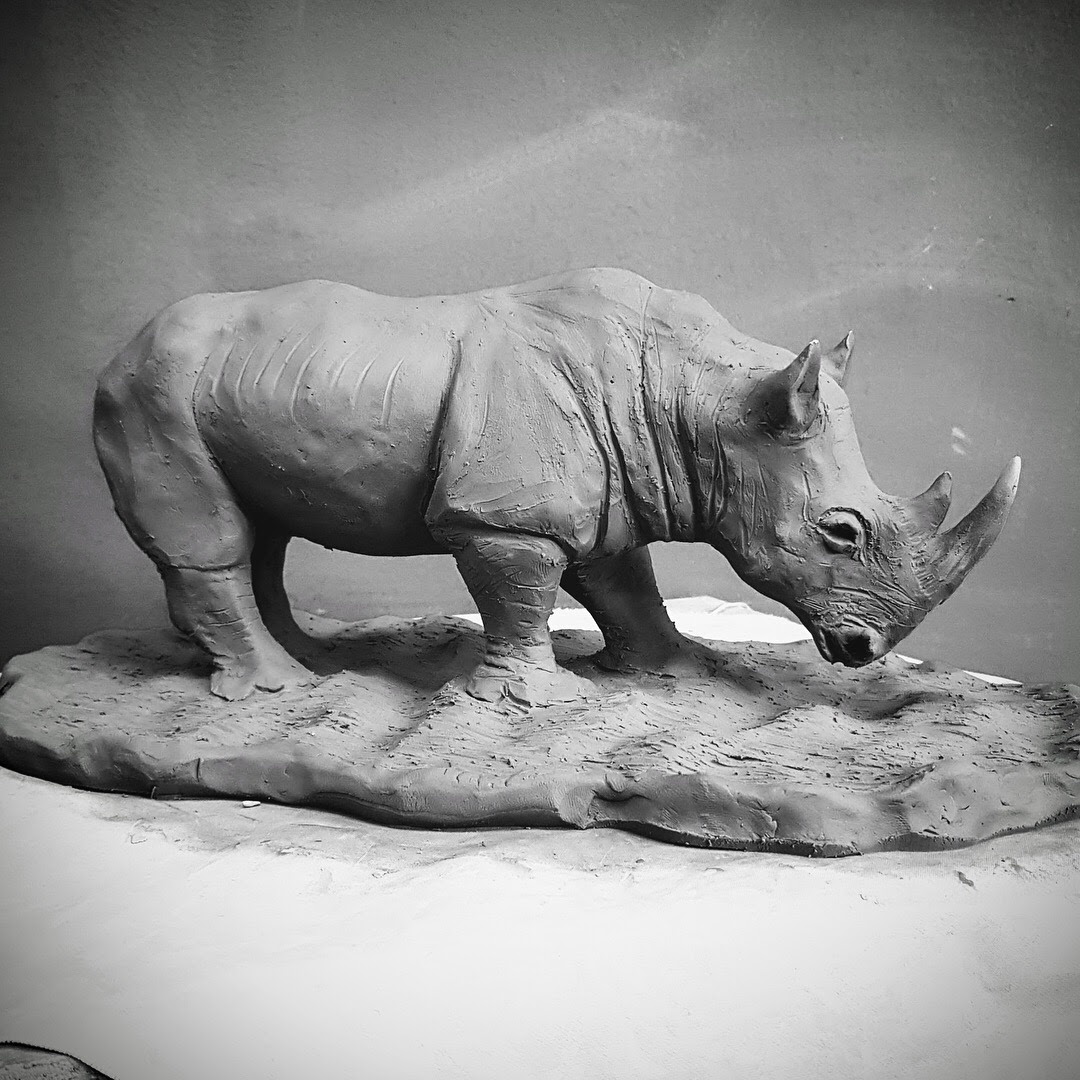
Wet clay model

Concept sketch - done on iPad Pro with Apple Pencil
Ceramic Sea Pod ("C Pod")
- Details
- Category: Sculptures
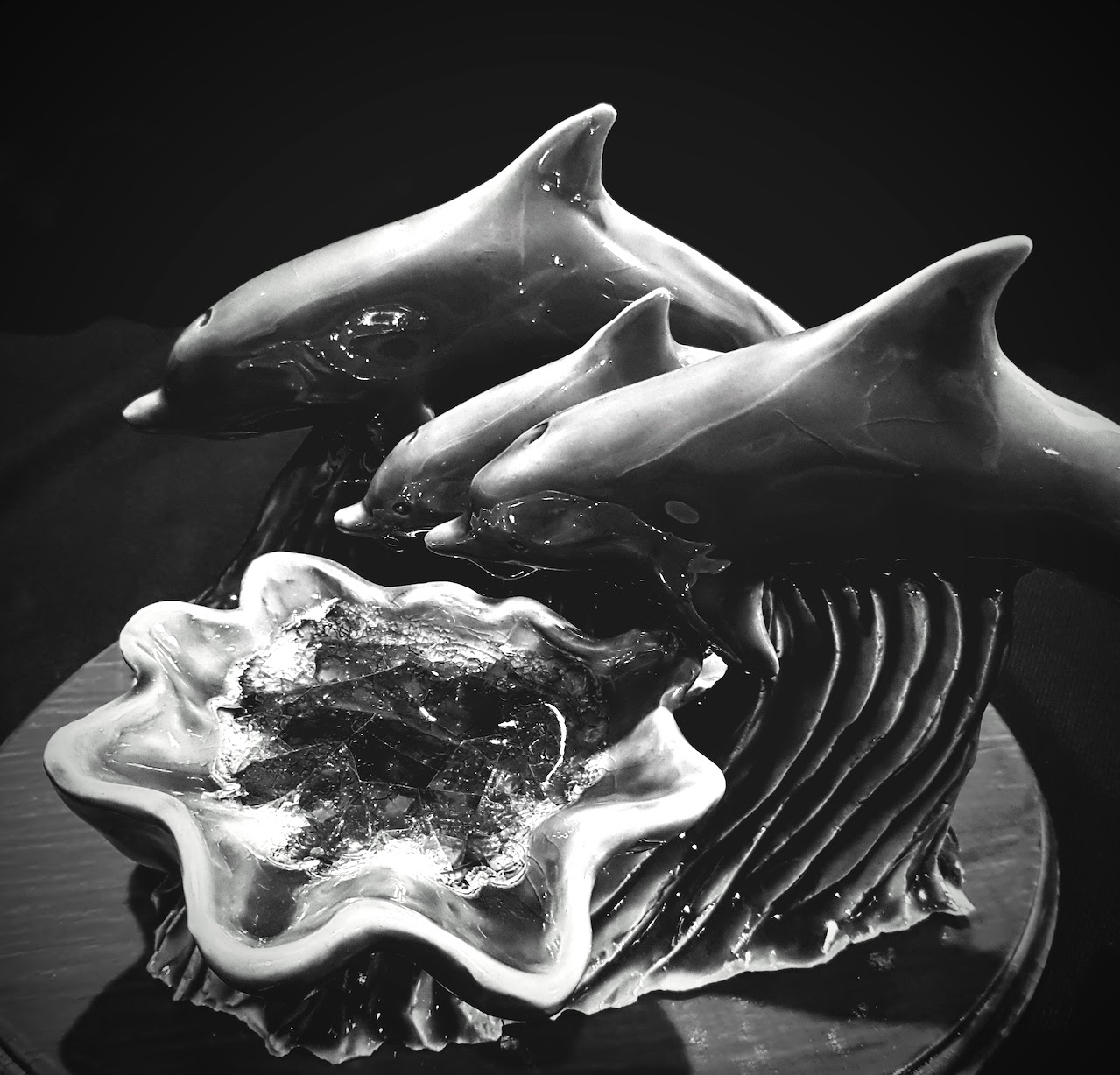
Dolphins mate at all times of the year, and the pregnancy lasts typically 12 months. The females give birth in shallow waters, and newborn calves instinctively swim to the surface for their first breath upon birth. Other females in the pod may also act as nurse maids and help raise the young. Baby dolphins breastfeed for up to 3 years and will stay with the mother for 4 to 8 years. As a dolphin pod travels, the young are kept in the center for protection. Coincidentally, a Harvard trained psychologist used dolphin families as a metaphor for ideal parenting. I really enjoyed sculpting this piece which clearly is a variation on an earlier theme. Both works were also personal gifts with intended meaning. My thanks again to the Ceramic Art Studio and Shop.
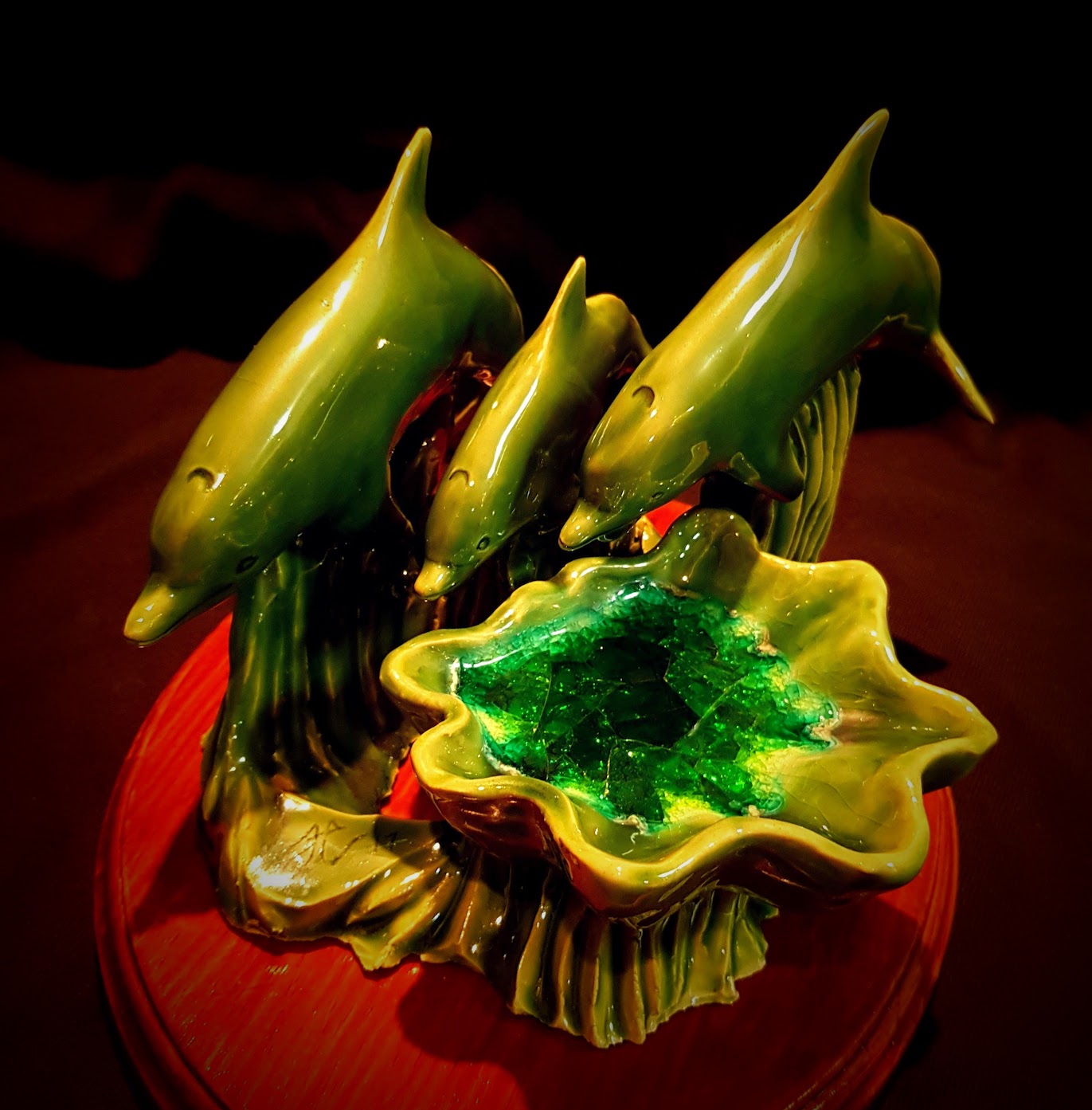


Wet clay model

Wet clay model in progress

Early concept sketch (iPad Pro with Apple Pencil)
Page 64 of 71