Home
Tyrannosaurus Rex
- Details
- Category: Sculptures
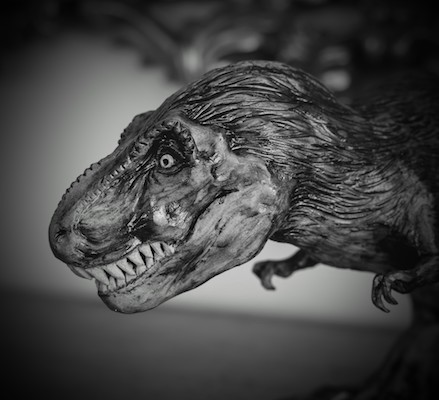
Ask any child what their favorite dinosaur is, and odds are that it will be the Tyrannosaurus Rex, possibly the most popular dinosaur species of all time. The Tyrannosaur was one of the largest land carnivores in Earth's history, weighing around 10 tons and over 40 feet in length. Tyrannosaurs roamed what is now North America, and much has been studied, conjectured, and discovered about this storied beast. The current prevailing scientific theories indicate that Tyrannosaurs had a combination of feathers, scales, and skin like their modern relatives, birds. There are even some data that suggest the type of melanin that existed in some parts of the facial structure, possibly indicating the coloration around the eye ridges. For my version, I started with the head and overall proportions from the Jurassic Park animatronic model by Stan Winston Studios and added my interpretation based on the latest theories. My thanks again to the Ceramic Art Studio and Shop.
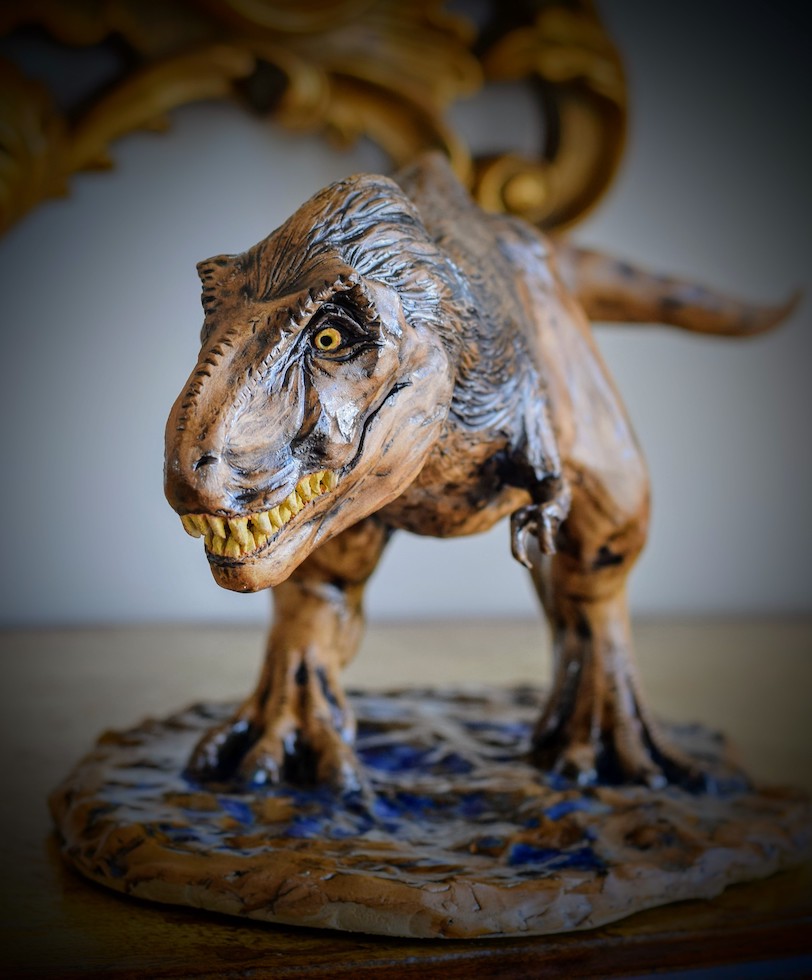
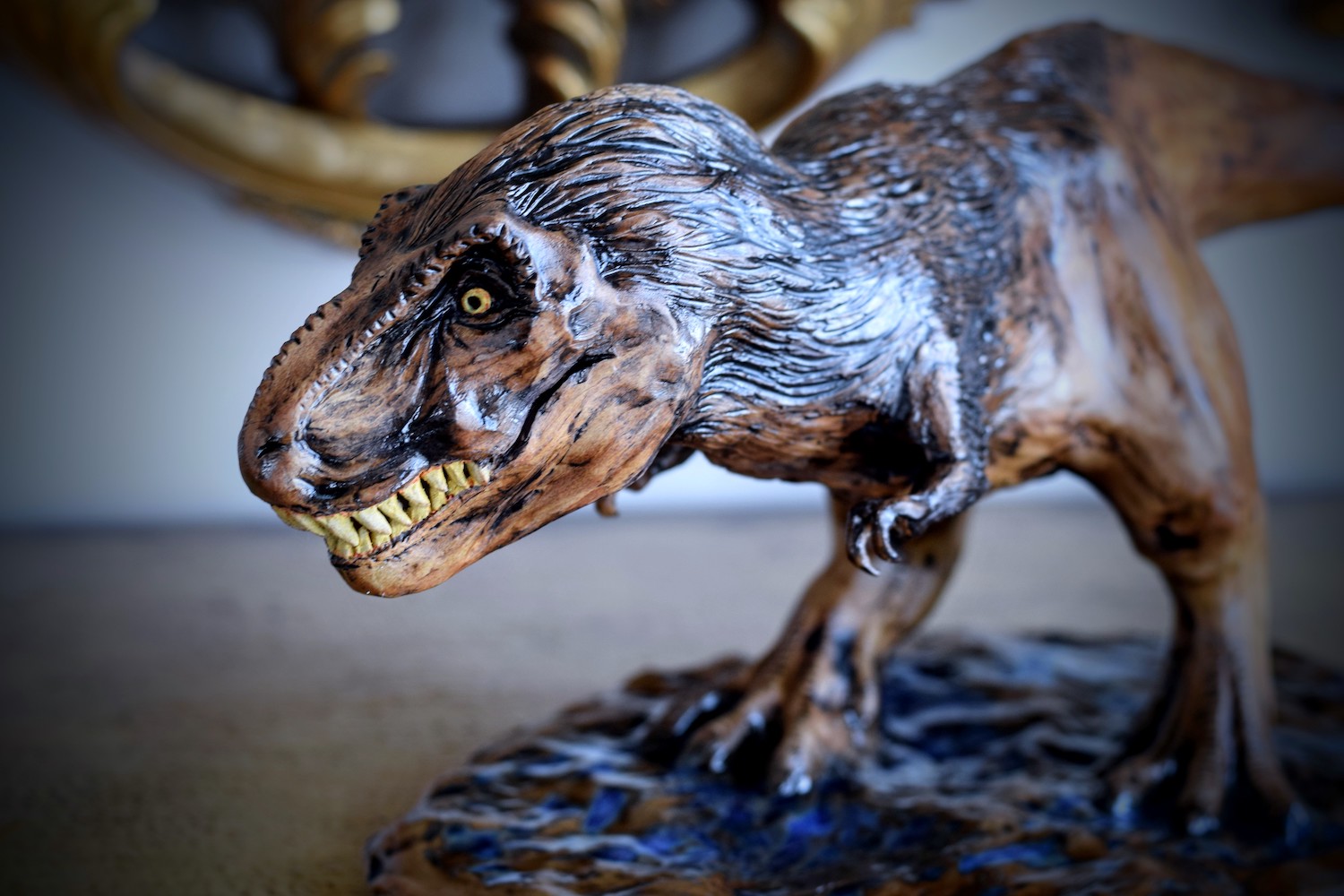
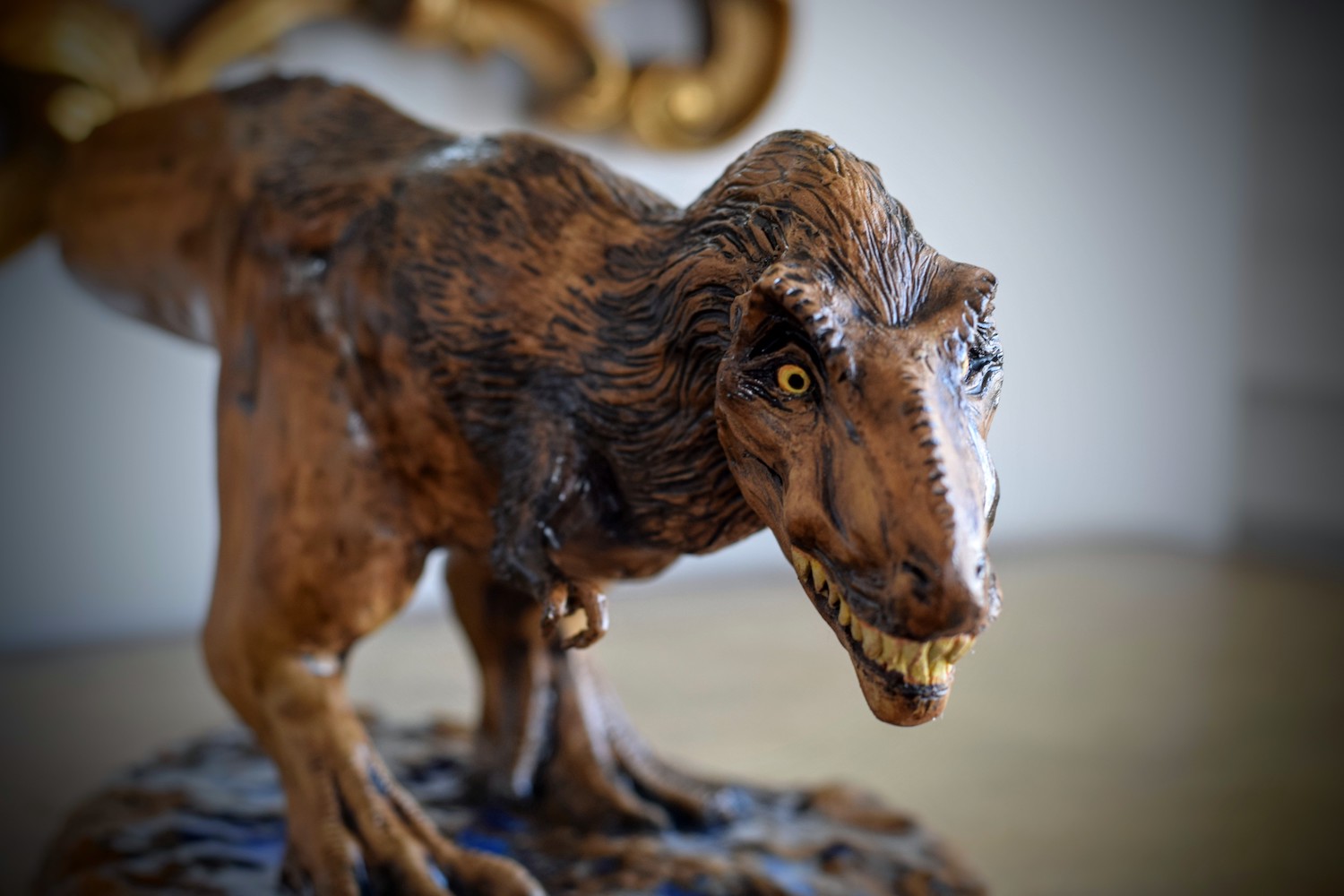
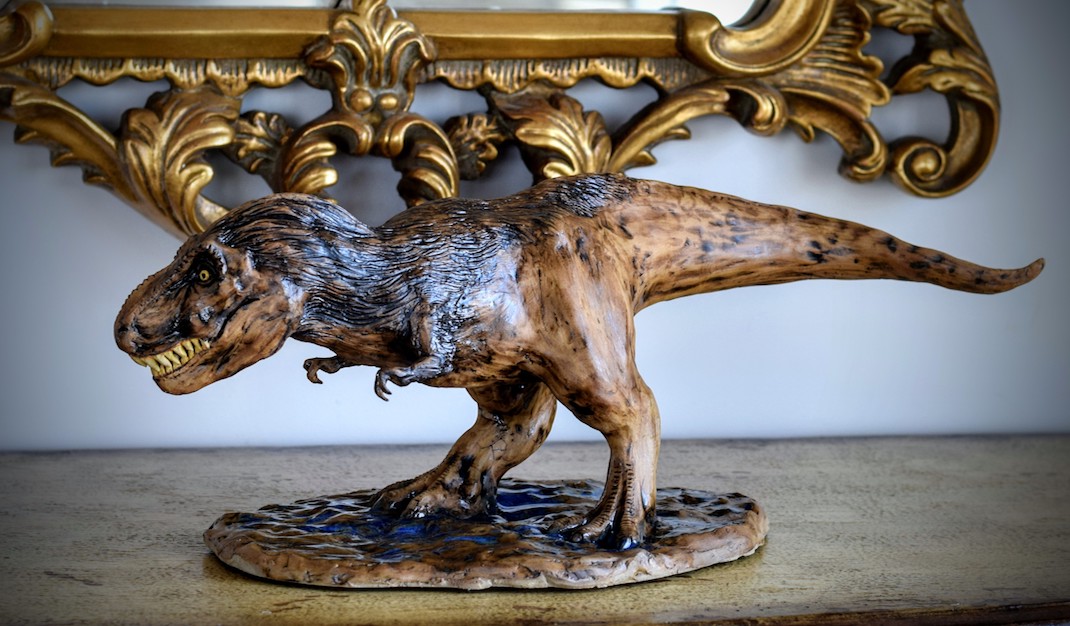
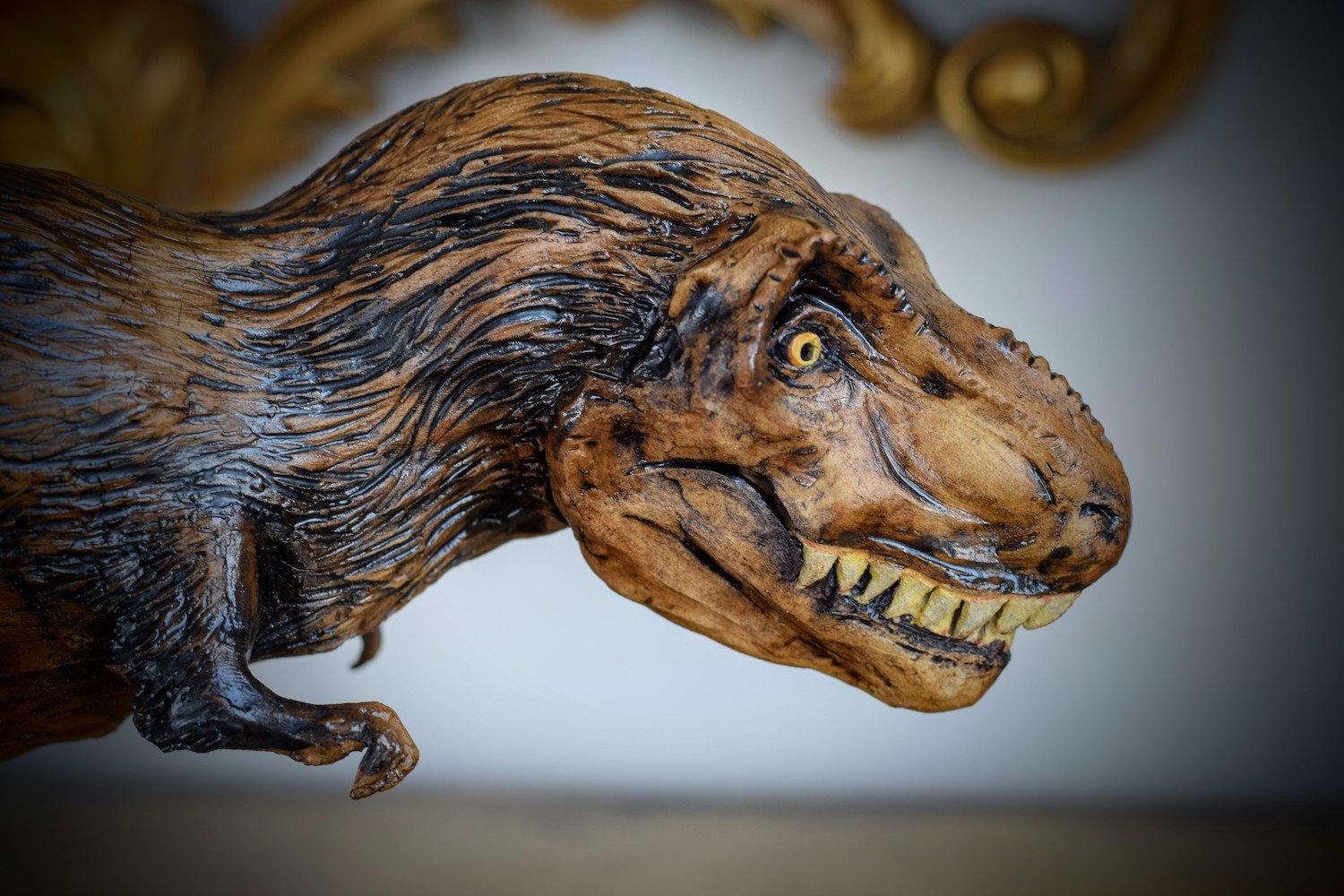

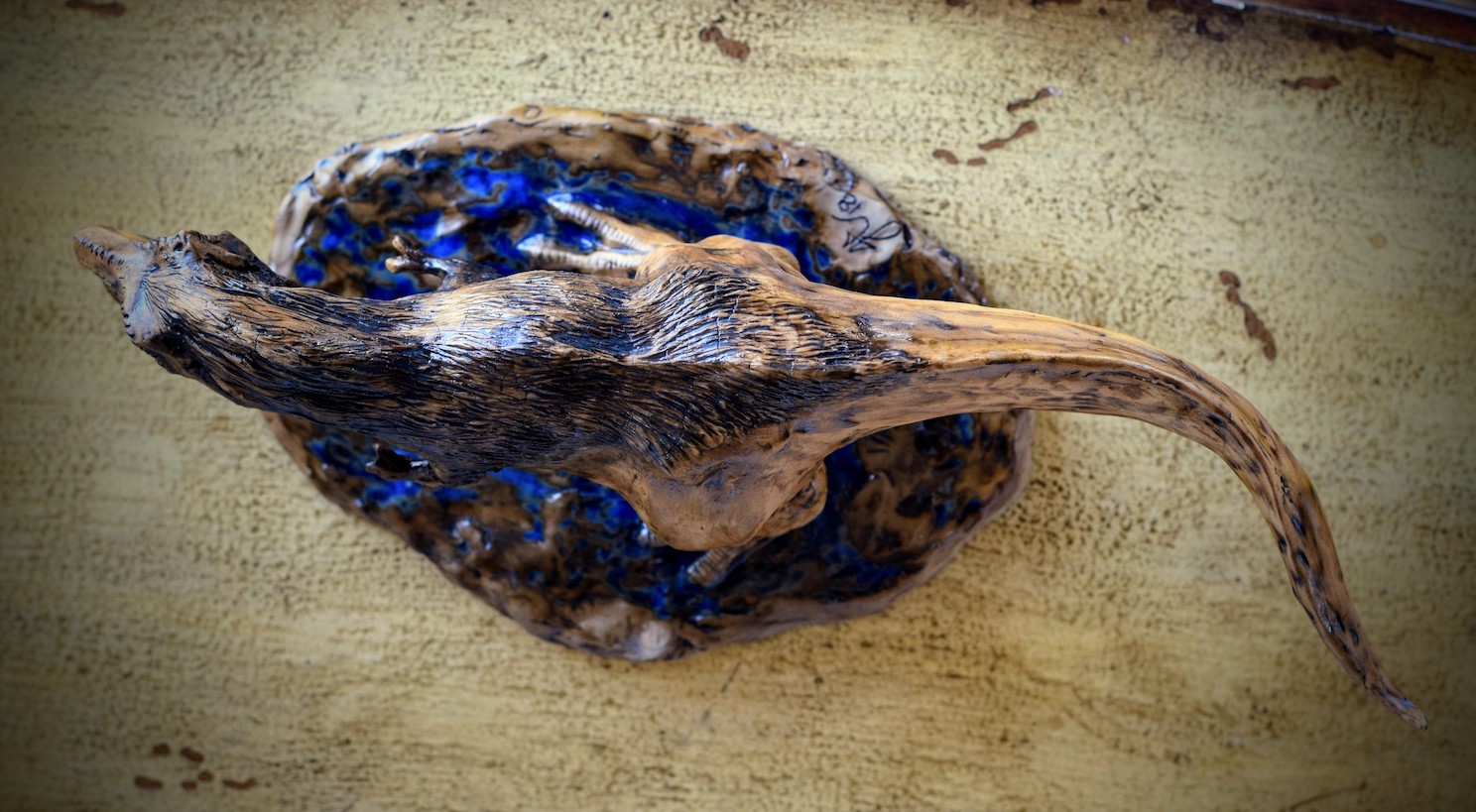
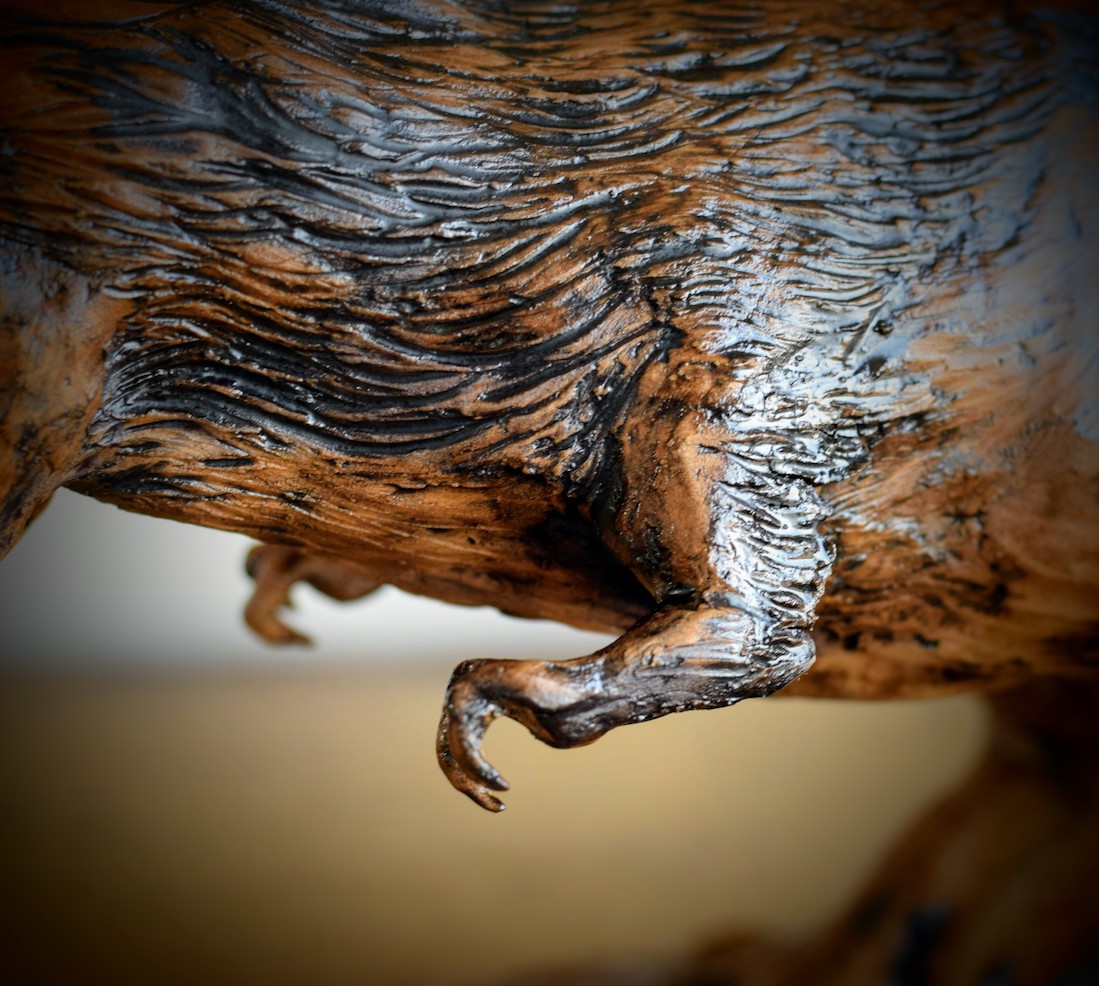
Did T-Rex have feathers? Almost certainly according to recent fossil evidence.
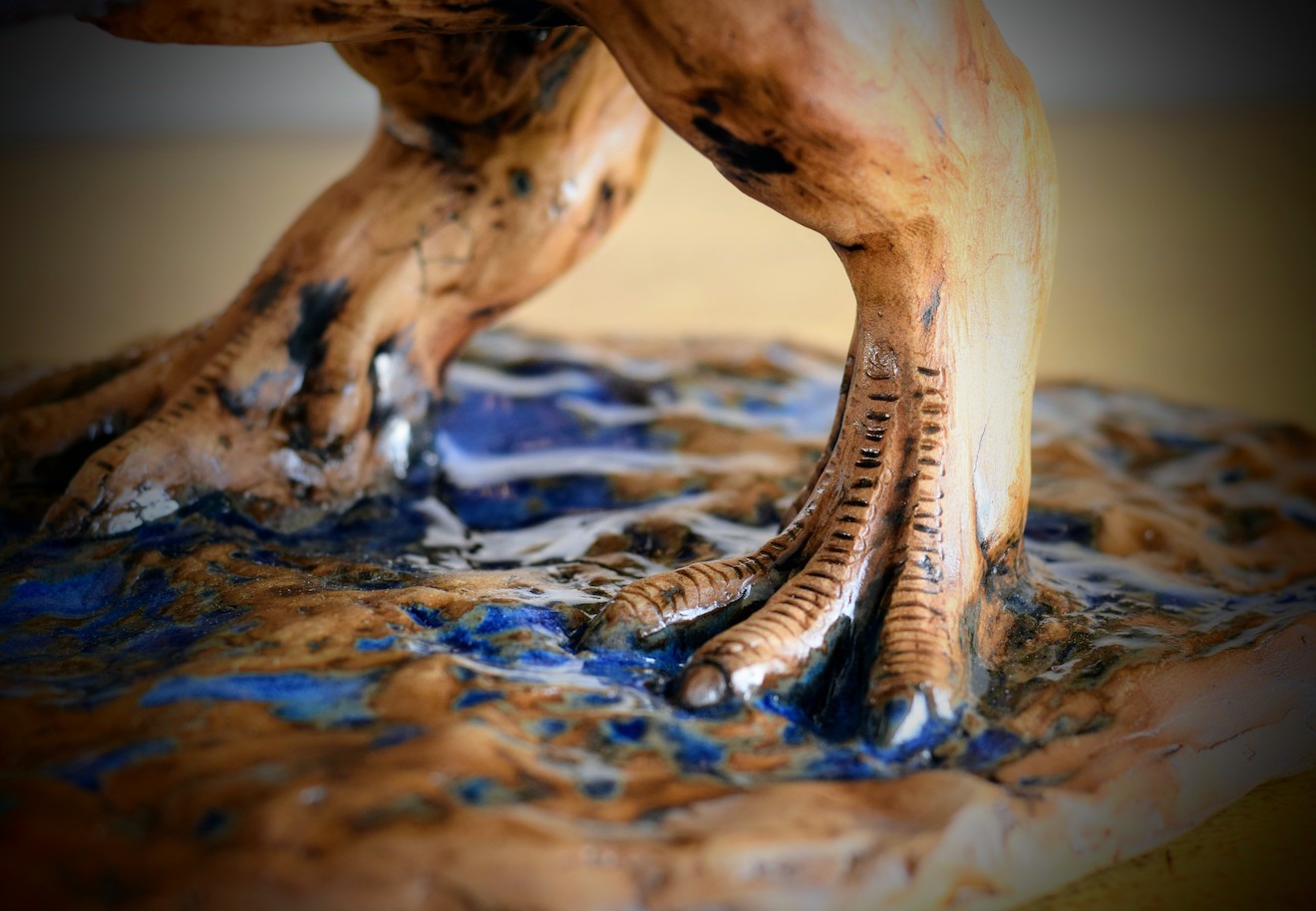
Would like to have thinned the feet more, but pottery clay has its limitations.
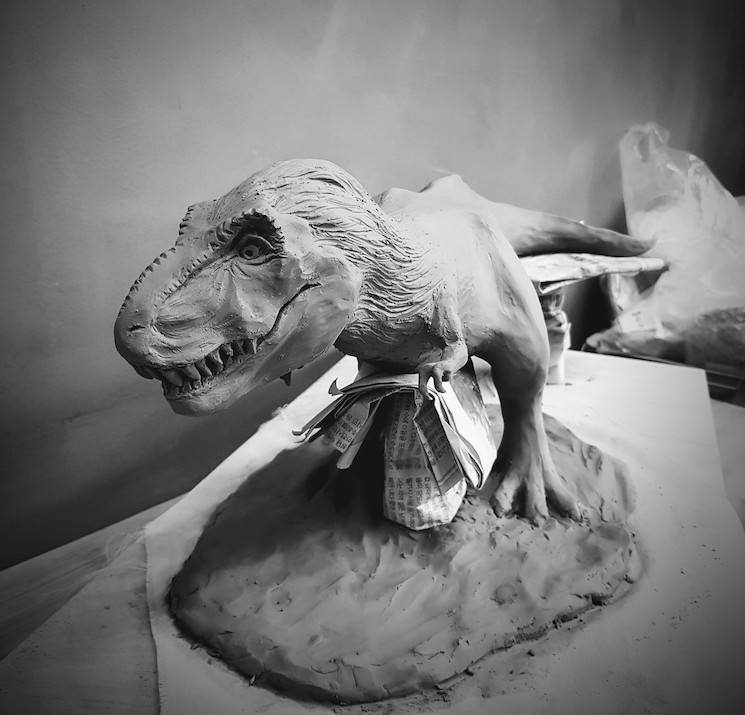
Wet Clay Model in progress
Classical Cosmos Mandala Plate
- Details
- Category: Sculptures

According to Wikipedia, a mandala (Sanskrit: मण्डल, maṇḍala; literally "circle") is a spiritual and ritual symbol in Hinduism and Buddhism, representing the universe. In common use, "mandala" has become a generic term for any diagram, chart or geometric pattern that represents the cosmos metaphysically or symbolically; a microcosm of the universe. I took this definition literally and combined the knowledge of ancient and modern astronomers to depict the Cosmos in ceramic. The galactic spiral motif divides the tray into seven sections. The spiraling ribs end at smaller circular spirals, each adorned with a symbol for the seven Classical Planets. (Classical Planets were seven astronomical non-fixed bodies that could be observed with the naked eye during ancient times: Sun, Moon, Mercury, Venus, Mars, Jupiter, Saturn) Within each of the seven sections are patterns found in nature (blood cells, wood grain, water, eddies, leaves, scales, and molecular bonds). Under an emerald explosion at the center rests a single lotus flower, with its petals opening outwards towards the far reaches of the Universe. The flaws in this piece represent not only the chaos and uncertainty of the Cosmos, but also indicate my lack of experience with clay. My thanks again to the Ceramic Art Studio and Shop.


Wet clay model

Concept sketch (The overall asymmetry is by design to reflect the elliptical and chaotic form of galaxies)
Budai ("Laughing Buddha")
- Details
- Category: Sculptures

In Chinese folklore, Budai is a deity whose name means "cloth sack" and is associated with contentment and abundance. Budai (Hotei in Japanese folklore) was based on an eccentric Chan monk who lived in the 10th century. It is believed that rubbing his belly brought wealth, good luck, and prosperity. In the west, Budai is mistaken for the Gautama Buddha and referred to as the "fat Buddha" or more popularly "laughing Buddha." My thanks again to the Ceramic Art Studio and Shop.


Wet clay model
Winged Victory of Samothrace (Reconstructed)
- Details
- Category: Sculptures

I first saw the Winged Victory of Samothrace at the Louvre in the summer of 1989. Back then I didn't truly appreciate its historical significance, but I recall being mesmerized by the sheer elegance and beauty of the pose. The goddess Nike appeared to be confidently striding forward, perhaps just upon alighting, as her hips and lower torso gracefully swing in balance with her extended right leg. My attempt was to sculpt the winged goddess Nike as a tribute to the unknown 2nd century Hellenistic artist of this timeless masterpiece. Sculpting her with kiln fired pottery clay however, allowed - or required me rather - to take some artistic liberties with her hair style and positioning of her arms. Incidentally, historians have a fairly good guess as to what the entire piece may have looked like prior to its destruction, based on ancient coins and a recovered right hand. There is a very informative video on YouTube on the restoration of the Winged Victory by the Louvre that explains this. My thanks again to the Ceramic Art Studio and Shop.


A hairline split formed across her neck during the second firing. This was probably due to the weight of her wings pulling her upper torso back while the terra cotta softened during the firing. The side benefit was the angle and curvature of the wings actually improved overall.


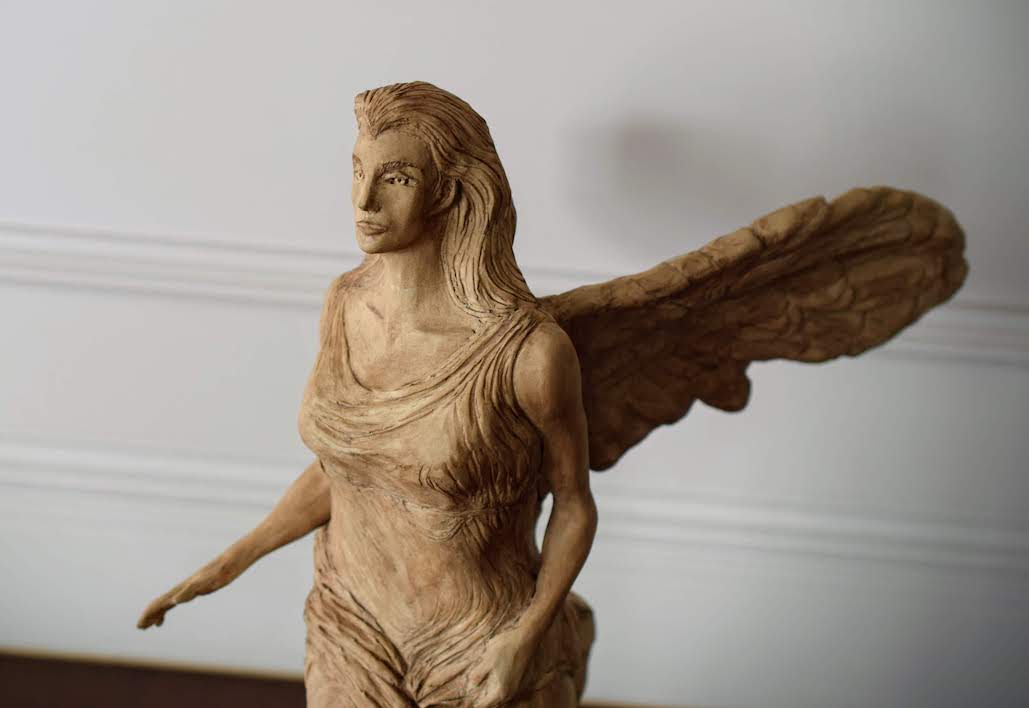

Wing detail - I actually tried to copy every feather on both wings from the Louvre piece.

Every feather...

Victory at night

Wet clay model at the earliest stage - total sculpting time at this point was about 8 hours.

Wet clay model - this is one of my favorite wallpapers. It captures the piece during my favorite stage of sculpting. Notice the steel support (coat hanger) that held the model vertically until the clay set.
Page 61 of 71